
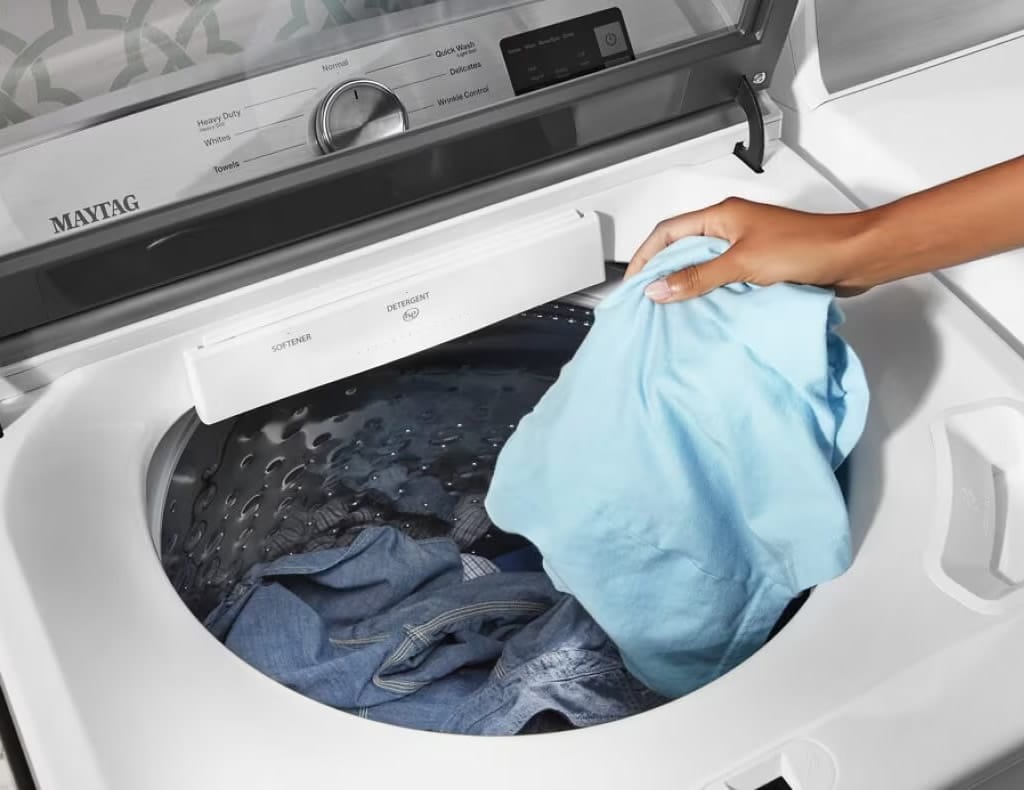
Choosing a washing machine isn’t just about design or features—the capacity of your washer plays a major role in how efficient, convenient, and effective your laundry routine will be. Pick the wrong size, and you could end up doing extra loads, wasting energy, or struggling to clean bulky items properly. The good news? Once you understand how washer capacity works and how it applies to your daily routine, choosing the right size becomes much easier.
What Does Washing Machine Capacity Actually Mean?
One of the most common misconceptions is confusing capacity with size. They’re not the same thing. Washing machine capacity refers to the space inside the drum, measured in cubic feet, and determines how much laundry you can wash in a single load. This means two washers can look identical on the outside but have very different capacities depending on their internal design.
In simple terms:
- Higher cubic feet = more laundry per load
- Lower cubic feet = smaller loads, more cycles
Most residential washers range from about 1.5 to 6.0 cubic feet, giving you plenty of options depending on your needs.
Why Washer Capacity Matters More Than You Think
Capacity directly impacts your daily life more than most people realize. A washer that’s too small will force you to run multiple loads, increasing time, water usage, and energy costs. On the other hand, a washer that’s too large for your needs may lead to inefficient half-loads.
But the biggest factor is cleaning performance.
Clothes need room to move freely inside the drum so water and detergent can circulate properly. When a washer is overloaded, even the best machine struggles to clean effectively. So choosing the right capacity isn’t just about convenience—it’s about getting cleaner clothes with less effort.
Washing Machine Capacity Chart (Simplified)
Let’s make it easy. Here’s how washer sizes typically break down:
Small Capacity Washers (1.5 – 3.4 cu. ft.)
These are compact machines designed for light laundry needs.
They can handle:
- Up to 9 bath towels per load
- 1–2 laundry baskets
Best for:
- Singles or couples
- Apartments or small spaces
Medium Capacity Washers (3.5 – 4.4 cu. ft.)
This is the most common range for households.
They can handle:
- Around 9–15 towels
- 2–3 laundry baskets
Best for:
- Small families
- Moderate laundry routines
Large Capacity Washers (4.5+ cu. ft.)
These are built for heavy-duty laundry needs.
They can handle:
- 11–21 towels per load
- Large or bulky items
Best for:
- Families of 3+
- Bedding, comforters, and large loads
Large washers are typically defined as 4.5 cubic feet or more, making them ideal for fewer, bigger loads.
How to Choose the Right Washer Capacity
Now let’s get practical. Choosing the right size comes down to how you actually use your washer.
1. Household Size
This is the starting point.
- 1–2 people → Small to medium washer
- 2–3 people → Medium washer
- 3+ people → Large washer
For example, a family of five typically benefits from 4.5 cu. ft. or more to keep up with laundry demand.
2. Laundry Frequency
Do you wash clothes daily or once a week?
- Frequent washing → smaller capacity works fine
- Less frequent washing → larger capacity saves time
If you prefer doing laundry once or twice a week, a large-capacity washer is a game changer.
3. Type of Laundry You Wash
Not all loads are equal.
If you regularly wash:
- Comforters
- Blankets
- Towels
- Bulky clothing
You’ll need a larger drum.
For example, washing a king-size comforter typically requires around 5.0 cu. ft. or more to allow proper movement.
4. Your Available Space
Capacity affects internal volume—but larger capacity machines are often physically bigger too.
Make sure to measure:
- Width
- Depth
- Height
- Door clearance
Even if the washer fits your needs, it still has to fit your laundry room.
Top Load vs Front Load: Which Has More Capacity?
Both types come in different sizes, but there’s an important difference. Front-load washers don’t have a central agitator, which means they often provide more usable drum space, even if their external size is similar to top-load models. Top-load washers, especially with agitators, may have slightly less usable space—but they still offer large capacity options.
So it’s not just about cubic feet—it’s about how that space is used.
How Full Should You Fill Your Washer?
Even with the perfect capacity, loading your washer correctly is crucial.
A good rule:
- Fill the drum half to three-quarters full
This allows clothes to move freely, which improves cleaning performance and reduces wear on the machine.
Overloading can lead to:
- Poor cleaning
- Excessive vibration
- Longer drying times
Underloading wastes water and energy.
Does a Bigger Washer Clean Better?
Not necessarily. A larger washer doesn’t automatically mean better results. What matters is giving your laundry enough space to move properly. In fact, an overloaded large washer can clean worse than a properly loaded medium one.
The goal is not “bigger”—it’s right-sized for your needs.
Common Mistakes When Choosing Washer Capacity
Many homeowners make the same avoidable mistakes:
- Choosing based only on price, not usage
- Ignoring bulky items like bedding
- Overestimating or underestimating load size
- Not measuring available space
Avoiding these mistakes can save you time, money, and frustration long-term.
Pro Tips to Maximize Washer Capacity
If you want to get the most out of your washer:
- Wash similar items together for better balance
- Distribute clothes evenly (especially in top-load washers)
- Clean your washer regularly to maintain performance
- Don’t compress clothes into the drum
These small habits improve efficiency and extend the life of your machine.
Final Thoughts
Choosing the right washing machine capacity isn’t about picking the biggest model—it’s about choosing what fits your lifestyle.
A well-sized washer:
- Saves time
- Improves cleaning performance
- Reduces energy and water usage
- Handles your real-life laundry needs
If you focus on your household size, laundry habits, and the types of loads you wash most often, you’ll make a smarter, more efficient decision. And once you get it right, laundry stops feeling like a constant chore—and starts working on your terms.