A refrigerator door that won’t stay closed is more than just an inconvenience. It’s a problem that quietly affects everything inside your kitchen, from food freshness to energy consumption. When the door doesn’t seal properly, cold air escapes, warm air enters, and your appliance is forced to work harder than it should.
The good news is that, in most cases, this issue isn’t complicated. It usually comes down to a few specific mechanical or organizational problems that you can identify and fix without replacing the entire appliance. The key is understanding what’s actually causing the door to fail.
What Happens When a Refrigerator Door Doesn’t Seal Properly
A refrigerator is designed to maintain a controlled, sealed environment. When the door doesn’t close correctly, even a small gap can disrupt that balance. Warm air enters, humidity increases, and internal temperatures fluctuate. Over time, this leads to several noticeable issues. Food spoils faster, condensation builds up inside, and the compressor runs more frequently, which increases energy consumption and accelerates wear on the appliance.
This is why a door that won’t stay closed should never be ignored. Fixing it early prevents more expensive problems later.
The Most Common Reasons Your Fridge Door Won’t Stay Closed
In most cases, the issue is not random. Refrigerator doors fail to close properly for a handful of well-known reasons, and each one affects how the door aligns, seals, or balances.
A Dirty or Damaged Door Gasket
The gasket is the rubber seal that runs along the edge of the door. Its job is to create an airtight barrier that keeps cold air inside. When it becomes dirty, cracked, or worn out, that seal weakens and allows air to leak.
Sometimes the problem isn’t visible damage but buildup. Grease, food residue, or debris can prevent the gasket from making full contact with the refrigerator frame. Even a small obstruction can break the seal and cause the door to pop open slightly.
The Refrigerator Isn’t Level
This is one of the most overlooked causes. If the refrigerator tilts forward, gravity works against the door instead of helping it close.
A properly adjusted refrigerator should lean very slightly backward. That subtle angle allows the door to swing shut naturally. When that balance is off, the door may stay ajar or reopen after being closed.
Loose or Misaligned Hinges
Hinges control how the door moves and aligns with the frame. Over time, they can loosen, bend, or wear out. When that happens, the door may hang unevenly or fail to meet the gasket evenly across all edges. You might notice the door rubbing, sagging, or requiring extra force to close. These are clear signs that alignment is no longer correct.
Too Much Weight in the Door
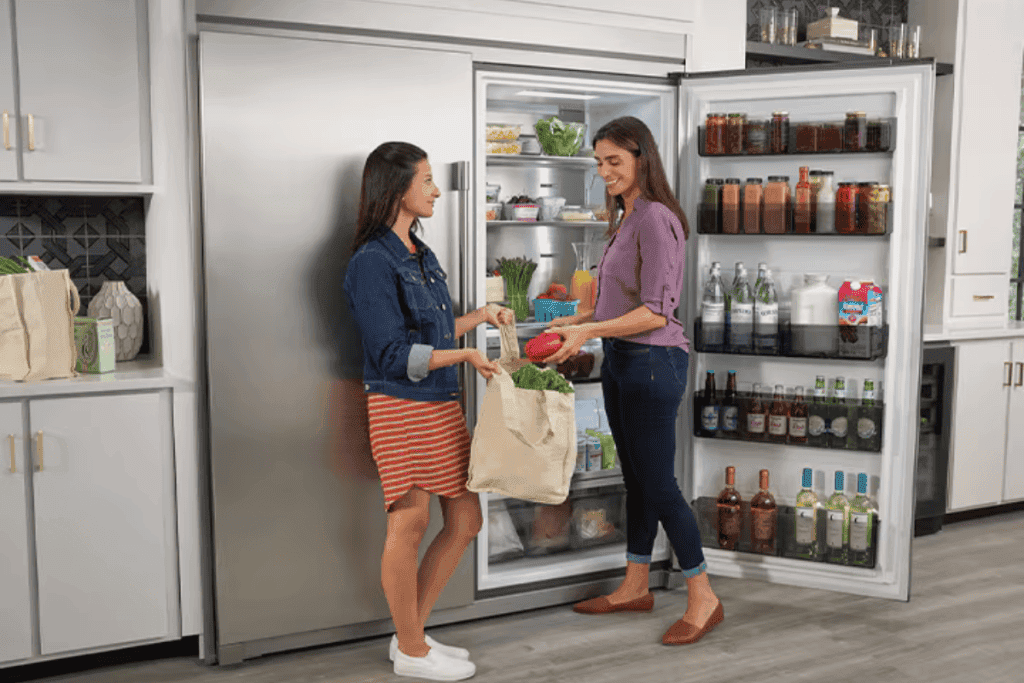
Modern refrigerators often include storage compartments inside the door, but overloading them can create problems. Heavy bottles, jars, or containers add stress to the hinges and can slightly pull the door downward. Even a small shift in alignment can prevent the gasket from sealing properly, especially along the top or bottom edges.
Items Blocking the Door from Closing
Sometimes the issue is as simple as something being in the way. Large containers, misaligned shelves, or drawers that aren’t fully pushed in can prevent the door from closing completely. This type of obstruction is easy to overlook because the door may appear closed at first glance, even though it isn’t sealing correctly.
How to Fix a Refrigerator Door That Won’t Stay Closed
Once you understand the possible causes, fixing the issue becomes much more straightforward. Most solutions involve small adjustments rather than major repairs.
Start by Inspecting the Door Seal
Check the gasket carefully along the entire edge of the door. Look for cracks, stiffness, or areas where it doesn’t sit flush against the frame. Cleaning it with warm water and mild soap can restore its grip if dirt is the problem.
If the gasket is damaged or has lost its flexibility, replacing it is often the most effective solution.
Check the Refrigerator’s Position
Place a level on top of the appliance to see if it’s properly aligned. If it tilts forward, adjust the front legs so the unit leans slightly backward. This small adjustment can make a noticeable difference, allowing the door to close on its own instead of staying open.
Examine the Hinges and Alignment
Open the door and observe how it moves. If it feels loose or uneven, tighten the hinge screws and check for visible misalignment. In some cases, worn hinges may need to be replaced to restore proper function. A correctly aligned door should close smoothly without resistance or gaps.
Reduce Weight and Reorganize the Interior
Remove heavy items from the door and redistribute them inside the main compartment. This reduces strain on the hinges and helps the door sit correctly. At the same time, check that shelves and drawers are fully inserted and not pushing against the door.
Make Sure Nothing Is Blocking the Seal
Take a moment to inspect the interior layout. Even a slightly protruding container can prevent the door from sealing. Adjust items so the door can close freely without resistance. This is often the quickest fix and surprisingly common.
Subtle Signs That Point to a Bigger Problem
Sometimes the issue goes beyond basic adjustments. If the door continues to open or fails to stay shut after you’ve checked the obvious causes, there may be internal components involved. Worn door cams, weakened magnetic strips, or structural warping can all interfere with proper closure. These problems are less visible but can still be diagnosed by observing how the door behaves. If it doesn’t “pull” itself closed in the final inches, or if it bounces back slightly, the mechanism responsible for sealing may be worn.
When It’s Time to Call a Professional
If you’ve cleaned the gasket, adjusted the level, checked the hinges, and reorganized the interior but the problem persists, it’s likely time for a professional inspection. At that point, the issue may involve internal components or structural misalignment that requires specialized tools or replacement parts. Continuing to use the refrigerator in this condition can lead to higher energy costs and potential damage to the appliance.
Fix the Cause, Not Just the Symptom
A refrigerator door that won’t stay closed is rarely a mystery once you understand how the system works. It’s almost always tied to sealing, alignment, or balance. By focusing on the gasket, leveling, hinges, and internal organization, you can solve the majority of cases quickly and effectively. More importantly, you prevent long-term issues that affect both performance and cost.
What seems like a minor inconvenience is actually a signal. When you address it early and correctly, your refrigerator runs more efficiently, your food stays fresher, and your appliance lasts longer.