Most people believe their refrigerator is just a cold box that keeps food from going bad. That assumption is exactly why so much produce ends up in the trash. If you’ve ever bought fresh vegetables with the intention of eating healthier, only to find them wilted a few days later, the problem usually isn’t the food. It’s how it’s being stored.
Crisper drawers are one of the most misunderstood parts of any refrigerator. They’re not just extra compartments. They are designed to control humidity and airflow in a very specific way, and when you use them correctly, they can dramatically extend the life of your fruits and vegetables.
Once you understand how they actually work, you’ll start to notice a real difference: fresher produce, less waste, and fewer trips to the grocery store.
What Crisper Drawers Are Really Designed to Do
Inside your refrigerator, not all areas are created equal. The main shelves are cold but relatively dry, which is not ideal for many types of produce. Crisper drawers solve this by creating a more controlled environment where humidity can be adjusted.
This matters because fruits and vegetables continue to “breathe” after being harvested. They release moisture and, in many cases, gases that affect how quickly they ripen or decay. The crisper drawer slows down this process by either trapping or releasing moisture, depending on how it’s set.
In simple terms, these drawers are designed to mimic the natural conditions that keep produce fresh for longer. But they only work when you match the setting to the type of food you’re storing.
The Core Principle: Humidity Controls Everything
There’s one concept that explains almost everything about crisper drawers: humidity. Some foods need a moist environment to stay crisp, while others need drier conditions to avoid rotting too quickly. That’s why most refrigerators include a small slider or control inside each drawer.
When the humidity is set high, airflow is restricted. Moisture stays inside the drawer, which prevents certain foods from drying out. When the humidity is set low, vents remain open, allowing air and gases to escape. Understanding when to use each setting is the difference between produce that lasts a week and produce that spoils in days.
Vegetables generally benefit from high humidity because they lose water quickly. Without enough moisture, they become limp and lose their texture. Fruits, on the other hand, often release ethylene gas, which accelerates ripening. If that gas is trapped, it speeds up spoilage, which is why they do better in a low-humidity environment where airflow is higher.
Why Mixing Fruits and Vegetables Causes Faster Spoilage
One of the most common mistakes is storing everything together in the same drawer. It seems convenient, but it creates the perfect conditions for food to go bad faster. Many fruits release ethylene gas as they ripen. Apples, avocados, and pears are well-known examples. When vegetables are exposed to that gas, they break down more quickly. Leafy greens, in particular, are highly sensitive and can go from fresh to unusable in a short time. Separating fruits and vegetables is not just about organization. It’s about preventing a chemical reaction that speeds up decay.
When each type of produce is stored in the right environment, you’re controlling both moisture and gas exposure. That combination is what preserves freshness.
Airflow: The Hidden Factor Most People Ignore
Humidity settings are only part of the equation. Airflow inside the drawer also plays a critical role. If airflow is too restricted, moisture builds up excessively, creating a damp environment where mold and bacteria thrive. If there’s too much airflow, the drawer becomes too dry, and produce starts to shrivel.
This balance is why overfilling the drawer causes problems. When there’s too much inside, air can’t circulate properly. Certain areas become overly moist while others dry out, leading to inconsistent results. You might notice condensation forming inside the drawer or certain items becoming slimy while others look dehydrated. These are signs that airflow is being disrupted.
A well-organized drawer leaves enough space for air to move freely while still maintaining the right level of humidity.
How to Organize Your Crisper Drawers for Better Results
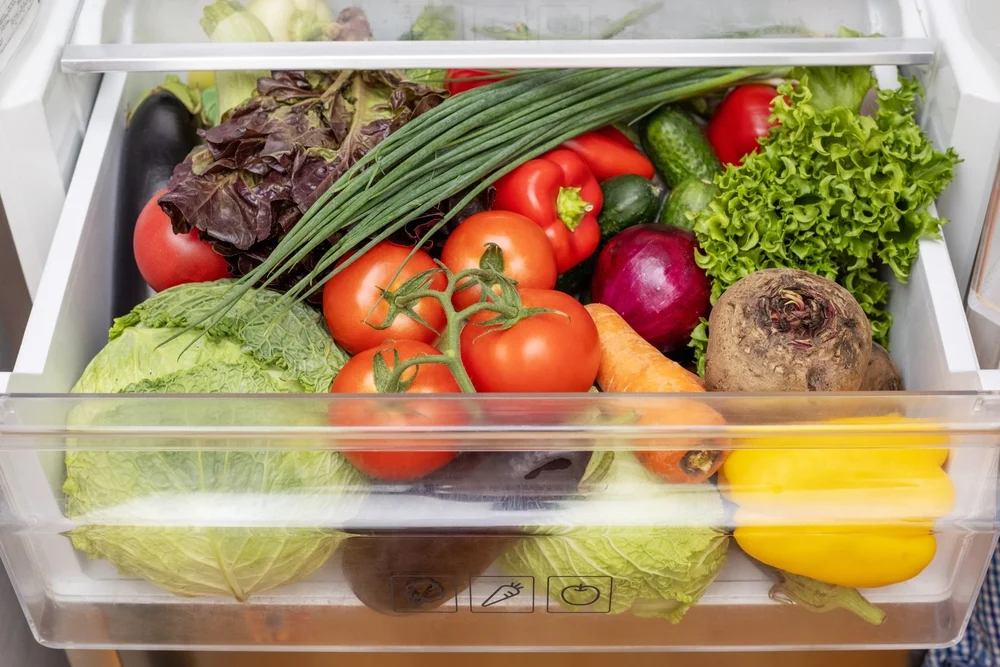
Organization is not about aesthetics. It directly affects how well your refrigerator preserves food. Vegetables should be grouped together in a high-humidity drawer. Heavier items like carrots and broccoli can go toward the bottom, while delicate items like leafy greens should be placed on top where they are less likely to be crushed. Fruits belong in a separate drawer set to low humidity. They should not be tightly packed, because airflow is essential to allow ethylene gas to escape. Keeping them slightly spaced out helps prevent rapid overripening.
This simple separation ensures that each type of produce is stored in an environment that matches its natural behavior.
Washing Produce Before Storage: A Costly Mistake
It might seem logical to wash fruits and vegetables as soon as you get home, but doing so can actually shorten their lifespan. Excess moisture is one of the main causes of spoilage. When produce is stored wet, especially in a high-humidity environment, it creates the perfect conditions for mold growth. A better approach is to store produce dry and wash it right before use. If something is already damp, drying it with a paper towel before placing it in the drawer can make a noticeable difference.
This small change alone can extend the freshness of many types of produce by several days.
Temperature Still Matters More Than You Think
Even if you use your crisper drawers correctly, the overall temperature of your refrigerator has a major impact on performance. If the temperature fluctuates or is set too high, produce will spoil faster regardless of humidity settings. If it’s too low, certain items can freeze, damaging their texture and flavor.
The ideal range for most refrigerators is between 35 and 38 degrees Fahrenheit. Within this range, the crisper drawers can maintain the right balance of moisture and airflow. If you consistently notice that food spoils quickly despite proper storage, it may be a sign that your refrigerator is not maintaining a stable temperature.
Subtle Adjustments That Make a Big Difference
Once the basics are in place, a few small adjustments can significantly improve results. Adding a paper towel inside the vegetable drawer helps absorb excess moisture, especially for leafy greens. This prevents the buildup of dampness that leads to slimy textures.
Regularly checking your produce is another habit that pays off. One spoiled item can affect everything around it, so removing anything that’s starting to go bad helps protect the rest. It’s also worth paying attention to how different fruits behave. Some produce much more ethylene gas than others. Keeping those items slightly separated, even within the same drawer, can slow down the ripening process.
These are not complicated changes, but they create a more stable environment where food lasts longer.
When the Problem Isn’t You—It’s the Refrigerator
Sometimes, even when everything is done correctly, the results are still disappointing. In those cases, the issue may not be how you’re using the crisper drawers, but how the refrigerator itself is functioning. Blocked air vents, inconsistent cooling, or worn seals can all interfere with proper airflow and humidity control. When that happens, the drawers can’t maintain the conditions they were designed for.
If you notice uneven cooling, excessive condensation, or rapid spoilage across different types of food, it may be time to check the appliance itself.
The Real Benefit: Less Waste, More Control
Using crisper drawers properly doesn’t require new tools or expensive upgrades. It’s about understanding a system that already exists in your kitchen. Once you start separating produce, adjusting humidity, and paying attention to airflow, the difference becomes obvious. Vegetables stay crisp longer. Fruits ripen more gradually. You throw away less food. Over time, that translates into real savings and a more efficient kitchen.
The reality is simple. Most people aren’t using their refrigerator to its full potential. But with a few adjustments and a better understanding of how crisper drawers work, you can completely change the way your food is stored and preserved.